

The Model Minority Myth: How It Impacts Asian Mental Health, Identity, and Self-Worth
Since COVID-19, you may have heard the term “Model Minority Myth” (MMM) used more often, especially during conversations about anti-Asian racism.
It's a confusing term...because it almost seems like a good thing. I mean, isn't it good to be a "model minority?" Like, my family has always told me to keep my head down and work hard. That's how we succeed, as Asians and as immigrants, right?
However, there is an insidiousness to MMM. This label is embedded in a history of racism, as a tactic to divide-and-conquer BIPOC communities. Because MMM has such a huge impact on Asian mental health, I want to spend some time to discuss it here.
Why the Model Minority Myth Matters for Asian Mental Health
While the Model Minority Myth is often discussed as a social issue, it also affects our mental health in deeply personal ways.
When we are constantly told that our value comes from achievement, intelligence, and success, it can shape how we see ourselves.
It can contribute to:
perfectionism and fear of failure
difficulty expressing emotions
feeling pressure to succeed
disconnecting from our cultural identity
feeling like we are never “Asian enough” or “successful enough”
Understanding the Model Minority Myth is not only about understanding racism. It is also about understanding how social messages become internal beliefs about who we are allowed to be.
What Is the Model Minority Myth and Where Did It Come From?
Very simply put, MMM is the idea that Asians are hardworking and successful. The concept of the Model Minority Myth gained prominence in the 1960s, particularly through media narratives that portrayed certain Asian American communities as successful and assimilated. These narratives were used within broader racial politics during the Civil Rights Movement to contrast Asian Americans with other racialized communities and minimize conversations about systemic racism.
During the Civil Rights Movement, Asian allies such as Grace Lee Boggs and Yuri Kochiyama (amongst others) fought in solidarity with black activists to demand racial equality. Kochiyama, who was friends with Malcolm X, was a witness to his assassination and held his head as he took his last breath. And Grace Lee Boggs and James Boggs were an activist couple who created The Boggs School.
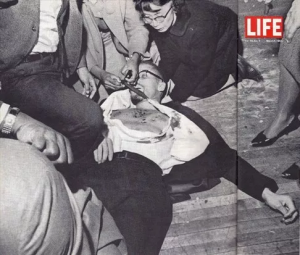
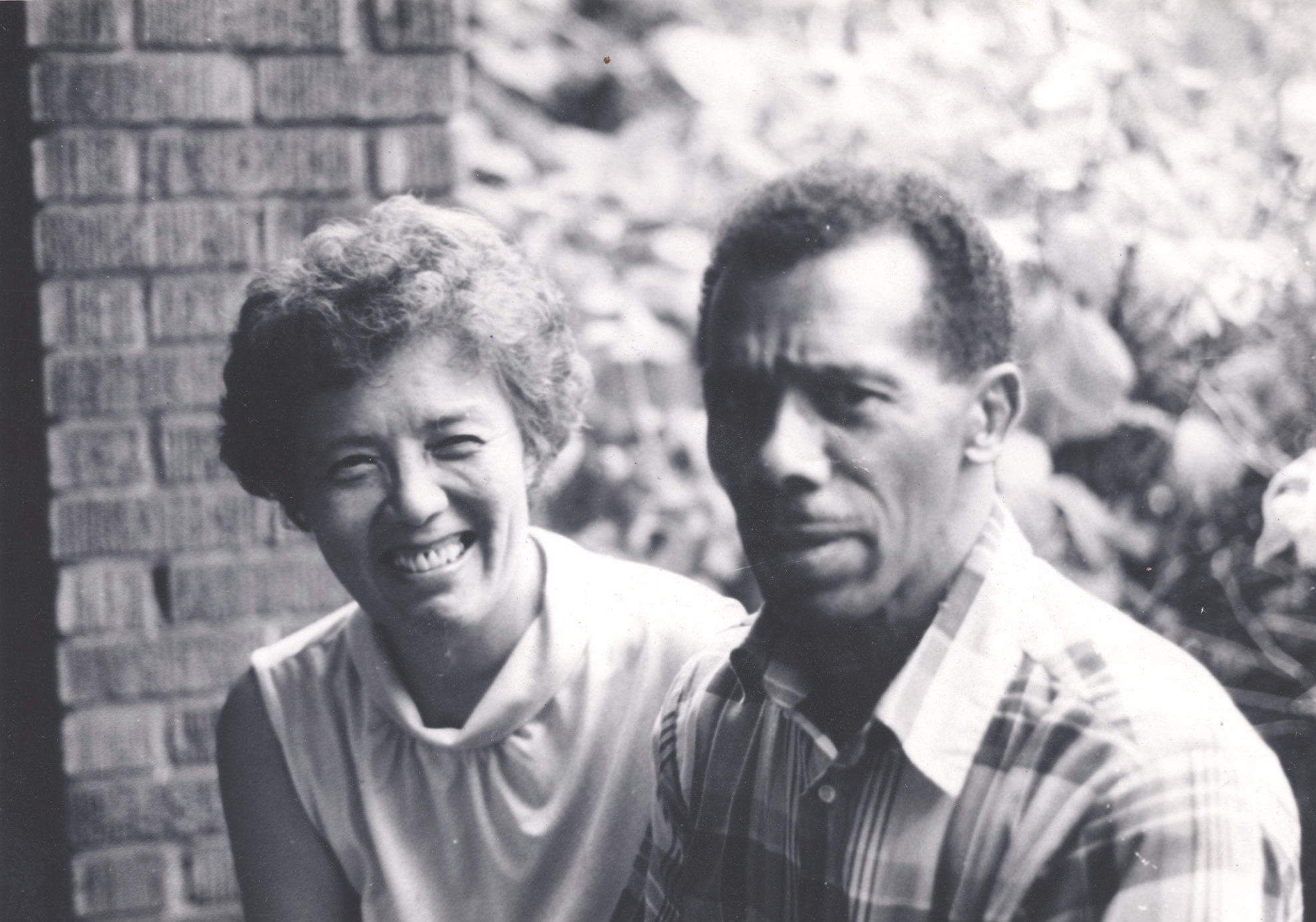
During this period of time, Asians were not yet "model minorities." The legacy of overt anti-Asian racism was still very real. We weren't far removed from the Japanese internment camps during WWII, the Chinese Exclusion Act, Chinese Head Tax, and anti-miscegenation laws. During this time, black-Asian solidarity was a powerful force that united our oppressed communities under the shared struggle of racial inequality.
Unity and solidarity is powerful, and is crucial in effecting social change. White supremacists and colonial states know this. So they fell back onto their tried and tested tactic: divide-and-conquer.
As part of the divide-and-conquer tactic, the colonial white supremacist state cherry-picked a group of “successful Asians” and labelled them as “model minorities.” This group was university-educated, upwardly mobile, and able to assimilate into American society.
The rationale of MMM was…if the racialized group of “Asians” can succeed, then why can't black Americans? It must be because there is something is wrong with black communities. The purpose of creating this new class of "model minority Asians" was to blame black communities for their struggles, and divert attention away from the existence of institutional racism. It simultaneously created a divide between Asian and black communities, to drive a wedge between our unity and solidarity.
The whole idea of creating the “model minority” label was to hide the existence of racism. But of course, racism exists, and is experienced by both Asian and Black communities.
However, the impact of the Model Minority Myth does not only exist at a societal level. It also shapes how many Asians learn to see themselves.
When a stereotype repeatedly tells you that your value comes from achievement, intelligence, and being "successful," it can become internalized. You may begin to measure your own worth through productivity, grades, career status, income, or how well you meet expectations.
This can create a difficult psychological conflict: you may feel pressure to succeed, while simultaneously feeling disconnected from yourself. You may achieve the things you were told would bring happiness, but still feel anxious, exhausted, or like something is missing.
Are Asians Really “Model Minorities”? Why This Stereotype Is Misleading
Some are. And some aren’t.
The category of “Asian” is so diverse. We have different cultures, countries, ethnicities, languages, histories, and religions. As individuals, we each have a different immigration story, different family upbringing, and different access to resources.
There are billions of Asians…can we really say that ALL Asians are successful model minorities? Of course not. It is a stereotype that was created and reinforced within systems of racism, and it has been used to create divisions between racialized communities while hiding the impact of systemic inequality. And the concept of model minority is mostly applied to the Asian diaspora.
While the idea of MMM has given Asians certain access to resources, it is also a detriment to our communities. We are considered hard workers, but not leaders. We are considered intelligent, but expected to be subservient. Our identity and worth is based on our achievements, which dehumanizes us.
And if we take a stroll in Chinatown, we immediately see the contradiction of "model minority." Chinatown was historically the result of segregation – because white society didn't want Asians living in their communities. Many in our community struggle with poverty, language barrier, legal status, insecure employment, police harrassment, etc. In fact, the Asian community has the greatest wealth disparity amongst all ethnic groups.
For many second generation Asian Canadians, the MMM can create a complicated relationship with success. The same achievement that creates opportunity can also become a source of pressure when it becomes tied to your identity and sense of worth.
Achievement may bring validation, safety, and opportunities. But it can also create pressure. You may feel like you always have to accomplish more before you can finally relax or feel proud of yourself.
This is where the Model Minority Myth overlaps with perfectionism, anxiety, and emotional burnout. The same beliefs that helped you survive and succeed can also become exhausting when your entire sense of worth depends on continuing to perform.
The decades of the divide-and-conquer tactic has made the "model minority" label the most prominent and discursively powerful representation of the Asian identity. This has given certain groups of Asians access to some resources. And it has made other Asians invisible in our cultural zeitgeist.
For individuals, this can create a complicated relationship with identity and self-worth. You may receive praise for being successful while simultaneously feeling unseen, misunderstood, or disconnected from yourself.
This can be especially painful because the outside world may view you as someone who is "doing well." People may assume you are successful, privileged, or have an easier path because of the model minority stereotype.
But stereotypes flatten human experiences. They erase the struggles that exist underneath the surface: family pressure, loneliness, racism, identity conflict, emotional suppression, and the pressure to constantly prove yourself.
Someone can be successful and still struggle. Someone can be grateful for their opportunities and still experience pain. Both can exist at the same time.
And let's be real...financial success is not exclusive to Asian commnities. But the historical creation of the "model minority" label means Asians are the only minority community where this label is applied onto.
Does the Model Minority Myth Mean Asians Don’t Experience Racism?
Yes, yes you do experience racism. And don’t let anyone tell you otherwise.
Part of the idea of MMM is to gaslight you, by telling you that you don’t experience racism. But you know that you do. I know that you do. Remember, the entire idea of model minority is rooted in racism.
It can be very isolating, adhering to the model minority life. For some people, adhering to the model minority expectation can become isolating. You may feel pressure to live the “white li(f)e,” minimizing parts of your racial identity in order to conform or assimilate. And that means you aren’t allowed to talk about your experience of racism. So you end up enduring it alone.
Despite adhering to the model minority life, you will never attain what you think is promised to you. Remember: "We are considered hard workers, but not leaders. We are considered intelligent, but expected to be subservient. Our identity and worth is based on our achievements, which dehumanizes us."
How Immigrant Parents and Culture Reinforce the Model Minority Myth
It’s complicated, because there are multiple layers of the same messaging.
MMM tells Asians that we have to work hard, achieve, be successful, and assimilate. Because that's our role within white supremacy.
But as immigrants, it also has a very similar message. The whole point of our parents leaving their home country was for a chance at a better life. They had to work extremely hard to adjust to a new home and new culture. And they imparted that "work hard" immigrant mentality onto us. For many immigrant families, this mentality came from survival. Hard work was not just a value. It was a strategy for creating safety and stability in an unfamiliar environment.
For children of immigrants, this creates a complicated inheritance. We may understand why our parents emphasized achievement and stability. Their sacrifices often came from love and a desire to protect us.
At the same time, we may also carry the emotional consequences of these expectations. When love, safety, and belonging become connected to achievement, it can become difficult to know who we are outside of what we accomplish.
Same thing with our culture. For some of us, the cultural message is "work hard" and "succeed."
However, valuing hard work and success isn't unique to Asian immigrants and Asian cultures. But these things are emphasized as “Asian traits” because it is part of the MMM label.
And I do want to emphasize that NOT ALL ASIANS receive the same messaging from their culture and parents. There are lots of diversity even within our culture.
So are you a model minority? Well, the next section might help you understand it better.
How to Break Free From the Model Minority Myth and Define Your Own Identity
So how do we know if someone is a model minority to begin with?
On the surface, I would seem like a model minority. I have postsecondary education, I own my own business, and I have access to resources. Am I a model minority?
While having resources and career success is an important marker of the "model minority," it is not the only aspect that is important. Part of being a "model minority" is to assimilate and to be subservient to white supremacy. It is to uphold white supremacy, protect racist institutions, and perpetuate racial inequality.
But to anyone who knows me, I am CONSTANTLY talking about racism and racial justice. And because of that, I won't really be considered a "model minority" by white supremacy standards. And to me, it is empowering to decide how I want to exist and resist within an oppressive regime.
It is made possible by understanding how MMM is situated within the larger white supremacy landscape. It helps us understand that our experiences are a complex mix of structural oppression and personal agency.
And through understanding this, we can begin separating our inherent worth from the expectations placed onto us.
Healing from the Model Minority Myth does not mean rejecting ambition, hard work, or the values that helped our families survive. It means creating the freedom to choose what success means for ourselves.
You can pursue excellence without needing to prove your worth. You can honour your family's sacrifices without carrying every generational expectation placed on you. And you can care about your community without losing yourself in the process.
Remember...you get to define how to live your life. Don't let racist labels, cultural expectations, or other people's definitions of success dictate your worth.
Continue Exploring Race, Identity, and Mental Health
Understanding racism and identity is not just about learning ideas. It is also about understanding how our experiences shape our emotions, relationships, and sense of self.
You may also want to explore:
The Model Minority Myth: 5 Ways it Damages Asian Mental Health and Fuels Internalized Racism
Asian Mental Health Stigma is Real But Racism Plays a Bigger Role
Asian Men, Racism, and Incel Culture: How Racism has Distorted Asian Masculinity
For many Asian Canadians, the impact of the Model Minority Myth is not just external. It can also shape how we see ourselves, how we relate to our emotions, and the expectations we place on ourselves.
You may notice this showing up as:
• Feeling like you are never doing enough, even when you are successful
• Struggling to rest because you feel guilty or unproductive
• Constantly overthinking whether you are making the right choices
• Feeling disconnected from your own emotions and needs
These patterns are often connected to deeper emotional experiences. I explore these topics more here:
Why You Overthink (And How to Actually Stop)
Learn how anxiety, perfectionism, and internal pressure can keep your mind stuck in constant problem-solving mode.
Emotional Neglect: Why You Feel Disconnected (Even When Life Looks Fine)
Explore how growing up without emotional validation can make it difficult to understand your own feelings, needs, and identity.
Hi, I’m Harry, a psychotherapist in Toronto. I work with 1.5 and second generation Asian Canadians navigating trauma, identity, and the emotional patterns shaped by family and culture.
I write about the intersections of mental health, culture, and identity, exploring how our experiences with family, society, and systems of oppression shape the way we understand ourselves and relate to others.
